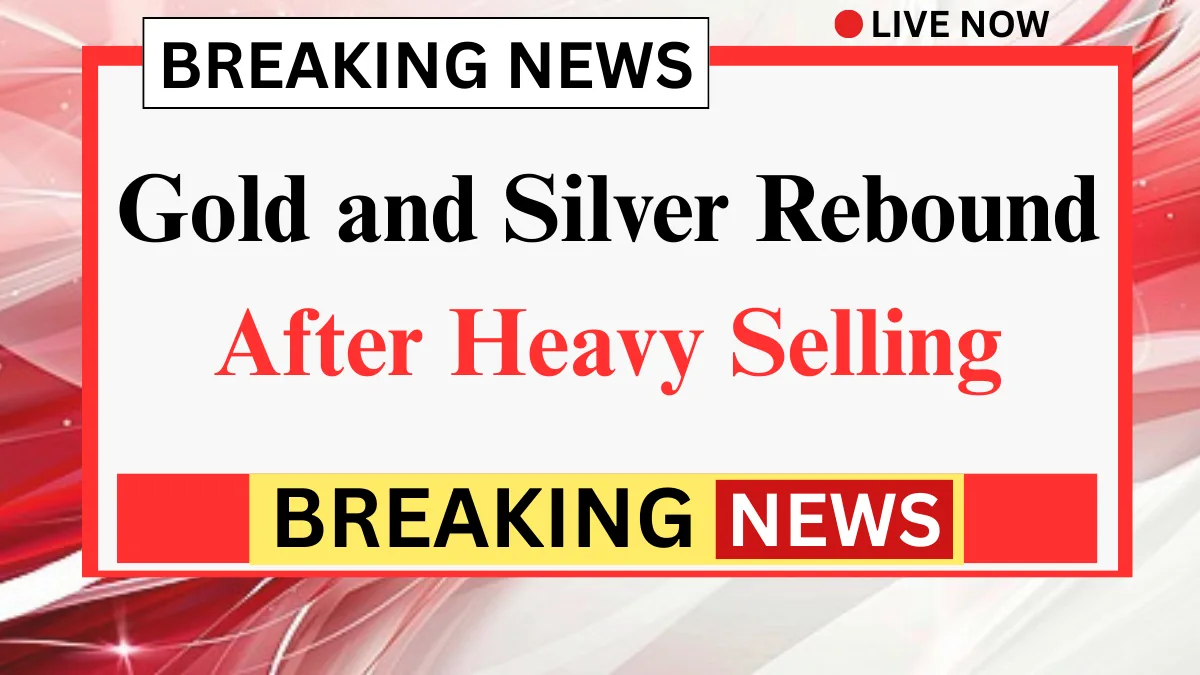
The precious metals market has demonstrated remarkable resilience in recent weeks, with gold and silver prices rebounding sharply after experiencing significant volatility. This recovery comes amid broader market turbulence that has sent investors scrambling for safe-haven assets, reigniting interest in these traditional stores of value.
Gold prices recently surged back above key psychological levels, while silver has shown even more dramatic percentage gains, outpacing its yellow metal counterpart. The rebound has caught the attention of both institutional investors and retail traders, prompting questions about what lies ahead for these critical commodity markets.

Understanding the Recent Market Shock
The recent shock to financial markets stemmed from multiple converging factors. Concerns about persistent inflation, central bank policy decisions, and geopolitical tensions created a perfect storm of uncertainty. Initially, this volatility pressured precious metals alongside other assets as investors liquidated positions to raise cash and manage risk exposure.
During the acute phase of the selloff, gold briefly dipped below support levels that had held for months, while silver experienced even steeper declines due to its dual nature as both a precious metal and an industrial commodity. The simultaneous pressure on equity markets, bonds, and commodities created a classic risk-off environment where virtually no asset class was spared.

However, the narrative quickly shifted as the dust began to settle. Investors remembered why they hold precious metals in the first place: as insurance against economic uncertainty and currency debasement. This realization triggered the buying wave that has characterized the recent bounce.
The Mechanics Behind the Recovery
Several fundamental factors have underpinned the recovery in gold and silver prices. First, real interest rates—nominal rates adjusted for inflation—remain a critical driver of precious metal valuations. While central banks have maintained relatively high policy rates, inflation expectations have proven sticky, keeping real rates in territory that historically supports gold prices.

Second, currency dynamics have played a significant role. The US dollar, which typically moves inversely to gold prices, has shown signs of weakness after an extended period of strength. A softer dollar makes gold more attractive to international buyers and reduces the opportunity cost of holding non-yielding assets like precious metals.
Third, physical demand has remained robust, particularly from central banks around the world. Countries seeking to diversify their foreign exchange reserves away from dollar-denominated assets have been consistent buyers of gold, providing a solid floor under prices even during volatile periods.
For silver specifically, the industrial demand component has added another dimension to its recovery. As the global economy shows signs of stabilization and the renewable energy transition continues to accelerate, demand for silver in solar panels, electronics, and other applications has provided fundamental support beyond its role as a monetary metal.
Technical Analysis and Price Levels
From a technical perspective, both gold and silver have reclaimed important support levels that were briefly violated during the market shock. Gold’s move back above the 200-day moving average is particularly significant, as this indicator often serves as a dividing line between bull and bear market conditions.
Silver’s percentage recovery has been even more impressive, consistent with its historical pattern of exhibiting higher volatility than gold. The gold-to-silver ratio, which measures how many ounces of silver it takes to buy one ounce of gold, has compressed during the rally, suggesting that silver is outperforming on a relative basis—a pattern typically associated with risk appetite returning to markets.
Chart patterns suggest that both metals have established higher lows, a bullish signal that indicates accumulation by longer-term investors. The recovery has also been accompanied by increased trading volumes, lending credibility to the price moves rather than suggesting a thin, unsustainable rally.
Looking Ahead: What Drives Future Prices?
The future trajectory of gold and silver prices will depend on several key variables. Monetary policy remains paramount. If central banks signal that they are nearing the end of their tightening cycles or, better yet, begin to cut interest rates in response to economic weakness, precious metals would likely benefit substantially. Lower rates reduce the opportunity cost of holding non-yielding assets and often coincide with currency devaluation fears.
Inflation trends will be equally important. Should inflation prove more persistent than policymakers expect, real interest rates would remain suppressed or even negative, creating an ideal environment for gold and silver. Conversely, if inflation falls more rapidly than anticipated, the calculus could shift, though this scenario seems less likely given current economic conditions.
Geopolitical factors cannot be ignored. Ongoing international tensions, whether trade-related, military, or diplomatic, tend to boost demand for safe-haven assets. The current global landscape suggests that such tensions are unlikely to dissipate quickly, providing a supportive backdrop for precious metals.
For silver specifically, the pace of industrial adoption will be crucial. The metal’s role in the energy transition, particularly in solar panel production, represents a secular growth driver that could support prices even if monetary metals demand moderates. Supply constraints in the silver mining industry also suggest that any demand surge could lead to significant price appreciation.
Investment Implications and Strategy
The recent bounce in precious metals prices offers several lessons for investors. First, volatility creates opportunities. Those who maintained positions or added during the weakness have been rewarded, underscoring the importance of a long-term perspective when investing in these markets.
Second, diversification matters. Precious metals demonstrated their value as portfolio diversifiers, recovering even as other risk assets remained under pressure. This behavior validates their role in a balanced investment approach.
Third, both momentum and fundamentals appear aligned. The technical recovery is supported by solid fundamental factors, making this more than just a short-term bounce. While corrections are inevitable, the overall trajectory appears constructive.
Investors should consider their time horizon and risk tolerance when approaching these markets. Short-term traders might focus on technical levels and momentum indicators, while long-term investors should emphasize the fundamental case for holding precious metals as insurance against monetary instability and economic uncertainty.
Conclusion: A Sustainable Rally?
The rebound in gold and silver prices following the recent market shock appears to rest on firm foundations rather than speculative excess. While near-term volatility will likely persist, the combination of supportive monetary conditions, persistent inflation concerns, geopolitical uncertainty, and robust physical demand suggests that precious metals have entered a favorable phase.
Whether prices continue their ascent or consolidate recent gains will depend on how the macroeconomic narrative unfolds in coming months. What seems clear, however, is that the knee-jerk selloff has given way to more thoughtful accumulation, and the traditional role of gold and silver as wealth preservers remains as relevant as ever in an uncertain world.