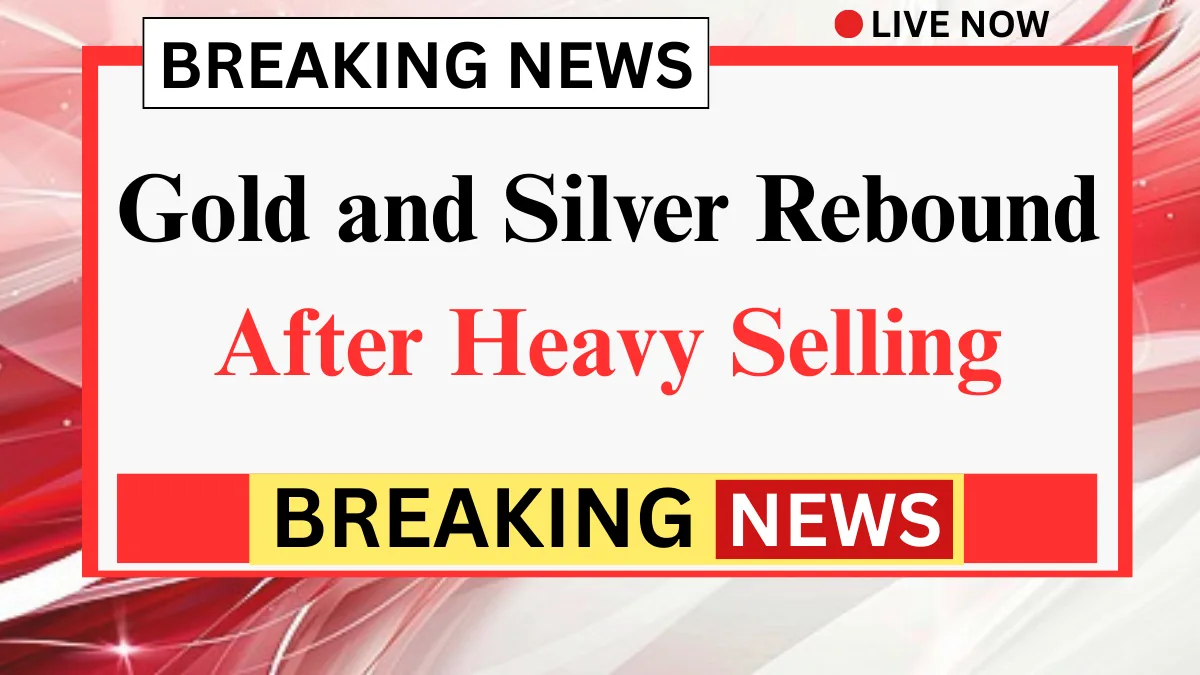
After weeks of intense selling pressure, gold and silver have staged a notable rebound, capturing the attention of global investors and reigniting debate about the future direction of precious metals. The recent volatility in bullion markets reflects a broader tug-of-war between economic uncertainty, shifting monetary policy expectations, and fluctuating currency dynamics. As prices recover from sharp declines, analysts are divided: is this merely a technical bounce, or the early phase of a renewed bull cycle?
A Turbulent Phase for Precious Metals
The recent downturn in precious metals markets was driven by a combination of strong U.S. economic data, rising bond yields, and a strengthening dollar. When Treasury yields climb, non-yielding assets like gold and silver tend to lose their appeal because investors can earn better returns in interest-bearing securities. At the same time, a stronger dollar makes metals more expensive for buyers holding other currencies, dampening global demand.

Gold fell sharply from its recent highs, while silver—typically more volatile due to its dual role as both a precious and industrial metal—experienced even steeper losses. The sell-off triggered profit-taking and stop-loss orders, accelerating the decline.
However, as bond yields stabilized and the dollar paused its rally, bargain hunters stepped in. Investors seeking long-term value saw the pullback as an opportunity to accumulate positions at relatively lower levels. The result: a sharp rebound that caught many short sellers off guard.

Technical Rebound or Fundamental Shift?
Market strategists suggest that part of the rebound is technical in nature. After heavy selling, markets often experience short-covering rallies. Traders who bet on falling prices rush to close their positions when momentum shifts, pushing prices higher in the process.
Yet beyond technical factors, there are underlying fundamentals supporting the recovery.

First, geopolitical tensions remain elevated in various parts of the world. Historically, gold has served as a safe-haven asset during times of political instability and conflict. Whenever uncertainty rises—whether due to trade disputes, regional conflicts, or global elections—investors often turn to gold to preserve wealth.
Second, inflation remains a persistent concern. While central banks have taken aggressive steps to combat inflation, price pressures in several economies remain above long-term targets. Gold is widely regarded as a hedge against inflation, and renewed worries about sticky consumer prices could bolster demand.
Silver, meanwhile, benefits from both safe-haven interest and industrial demand. Its use in solar panels, electronics, and electric vehicle components positions it at the intersection of financial markets and the global energy transition. As governments push for renewable energy expansion, silver’s industrial consumption may provide a structural tailwind.
The Role of Central Banks
Central bank activity continues to play a critical role in the gold market. In recent years, central banks around the world have significantly increased their gold reserves, seeking diversification away from dollar-denominated assets. This trend has provided consistent underlying demand for gold, even during periods of price weakness.
If central bank buying remains strong, it could help establish a floor under gold prices. Analysts note that official sector purchases tend to be long-term strategic decisions rather than short-term speculative moves, which adds stability to the market.
Interest Rates: The Deciding Factor
Perhaps the most significant variable influencing gold and silver prices is interest rate policy. Precious metals are highly sensitive to expectations regarding central bank decisions.
If inflation cools faster than expected and central banks begin signaling rate cuts, gold and silver could benefit significantly. Lower interest rates reduce the opportunity cost of holding non-yielding assets, making metals more attractive.
On the other hand, if economic data continues to show resilience and policymakers maintain higher rates for longer, the upside for gold and silver could be limited in the short term.
Experts emphasize that forward guidance from major central banks, particularly the Federal Reserve, will be pivotal in shaping the next phase of the metals rally.
Silver’s Unique Position
While gold often dominates headlines, silver’s performance may be equally compelling. Historically, silver tends to outperform gold during strong bull markets. Its higher volatility can amplify gains once upward momentum takes hold.
Industrial demand remains a key differentiator. The global shift toward renewable energy—especially solar power—requires substantial silver usage. Analysts project steady increases in silver consumption over the next decade, driven by green infrastructure projects.
However, silver’s dual nature can also be a drawback. If global economic growth slows sharply, industrial demand could weaken, limiting price appreciation.
Investor Sentiment Shifts
Recent market data suggests that investor sentiment toward precious metals is improving. Exchange-traded funds (ETFs) backed by gold and silver have started to see modest inflows after weeks of outflows. Futures market positioning also indicates that speculative bearish bets have decreased.
Sentiment often plays a powerful role in commodity markets. Once confidence returns and momentum builds, it can attract additional capital, reinforcing price trends.
Yet experts caution against over-enthusiasm. Volatility remains high, and sudden macroeconomic developments could quickly alter the landscape.
What Could Happen Next?
Experts outline three potential scenarios for gold and silver:
1. Gradual Uptrend:
If inflation remains sticky but central banks signal a pause in tightening, metals could grind higher steadily. In this scenario, gold may retest previous highs, and silver could outperform on percentage terms.
2. Sideways Consolidation:
If economic data remains mixed and monetary policy stays restrictive, metals may trade within a broad range. Investors could see choppy price action without a clear breakout in either direction.
3. Renewed Downside Pressure:
If bond yields surge again and the dollar strengthens significantly, gold and silver could face renewed selling pressure. This scenario would likely require stronger-than-expected economic growth and persistent hawkish central bank messaging.
Long-Term Outlook
Despite short-term volatility, many analysts maintain a constructive long-term outlook for precious metals. Structural factors—including global debt levels, geopolitical uncertainty, and the diversification strategies of central banks—provide ongoing support.
Additionally, concerns about currency debasement and fiscal imbalances continue to fuel interest in tangible assets. Gold, in particular, has maintained its reputation as a store of value across centuries of economic cycles.
Silver’s long-term trajectory may be even more dynamic due to its industrial applications. As clean energy technologies expand and digitalization continues, demand for silver could see sustained growth.
Risk Factors to Watch
Investors should remain mindful of several risks:
- Unexpectedly strong economic growth reducing safe-haven demand
- A sharp rise in real interest rates
- Reduced central bank gold purchases
- Industrial slowdowns affecting silver demand
Managing exposure through diversification and careful position sizing remains essential.
Conclusion
The rebound in gold and silver after heavy selling has reignited optimism in precious metals markets. While technical factors contributed to the initial bounce, deeper macroeconomic forces may determine whether this recovery evolves into a sustained rally.
With inflation concerns lingering, geopolitical tensions simmering, and central bank policy at a crossroads, gold and silver remain at the center of investor attention. Whether this marks the beginning of a new upward cycle or simply a temporary recovery will depend largely on interest rate trajectories, economic data, and global stability.
For now, one thing is certain: the precious metals market is far from quiet—and the next move could be significant.